

 By
By Do Rove Carts Have Pesticides? What Lab Tests Actually Show
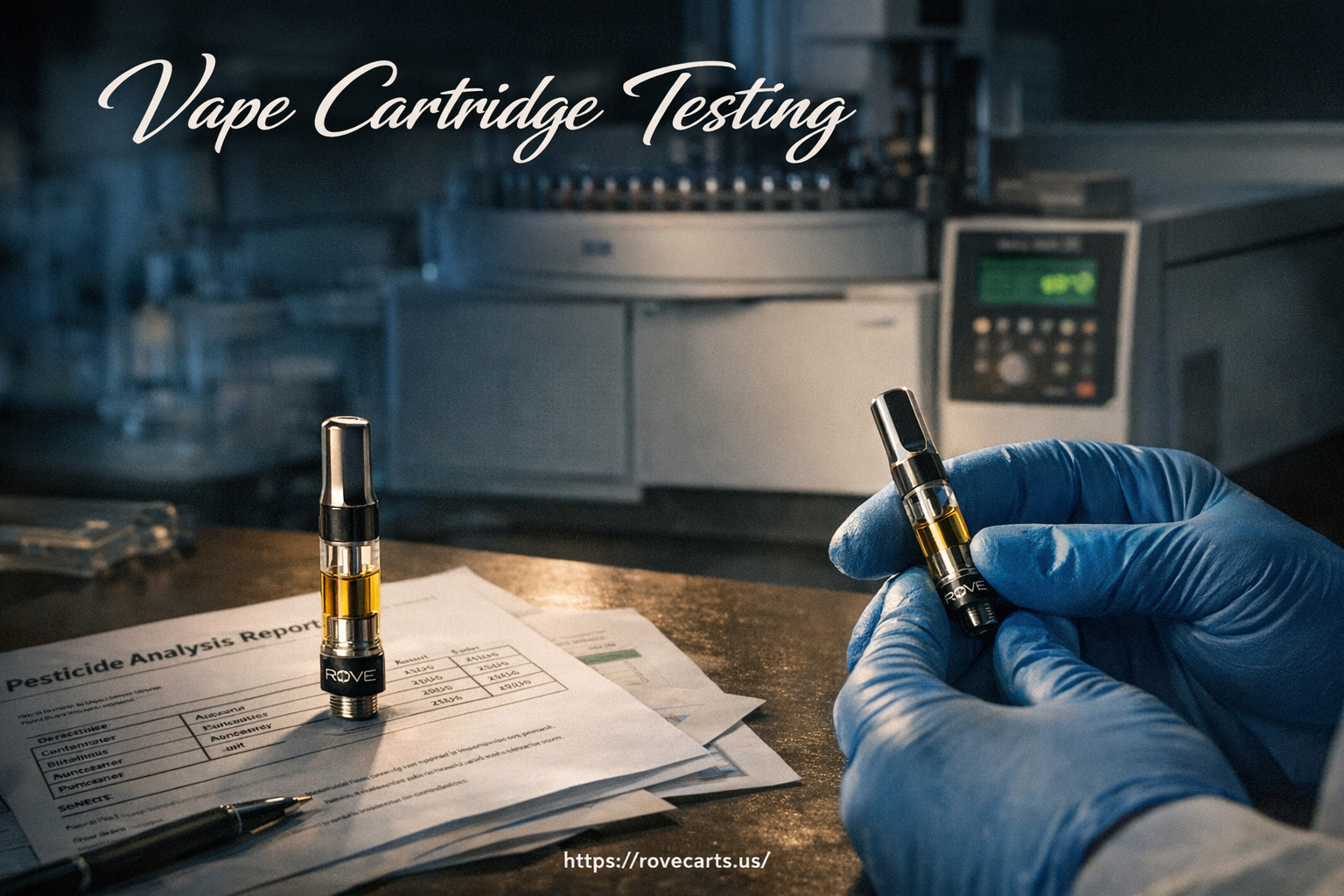
If you’re asking do rove carts have pesticides, the most accurate answer comes from lab reports—not rumors, screenshots, or packaging claims. Cannabis oil can contain pesticide residues if the source flower was treated or if extraction and handling weren’t tightly controlled. Reputable brands address this by batch testing and publishing (or providing) a Certificate of Analysis (COA) that includes pesticide screening.
Rove positions itself as a quality-first brand and highlights in-house control from cultivation to cartridge on its site. That’s useful context, but what matters most for pesticide safety is the testing panel on the COA for the specific batch you’re holding.
Why Pesticide Questions Come Up With Vape Cartridges
Pesticides are used in agriculture to manage pests and mold. In cannabis, certain compounds are restricted or prohibited because inhalation risk can be higher than ingestion. Concentrates can also intensify contamination concerns because extraction can concentrate some compounds along with cannabinoids and terpenes.
Common ways residues can show up
- During cultivation: foliar sprays, systemic pesticides, or contaminated inputs.
- Cross-contamination: shared equipment or storage areas that weren’t properly cleaned.
- Supply chain opacity: when a brand can’t document where biomass came from or how it was handled.
What “Lab Tested for Pesticides” Actually Means
When people search “rove cart pesticide testing” or “rove cartridge lab test pesticides,” they’re usually looking for proof that a specific product batch was screened for a regulated list of pesticide compounds and met the state’s pass/fail limits.
Where pesticide results appear on a COA
A COA is typically split into sections (panels). For pesticide screening, you’ll usually see a table listing individual pesticide analytes with results like:
- ND (Not Detected) or “<LOQ” (below the limit of quantitation)
- Detected amount (if present, sometimes still below legal limit)
- Pass/Fail status based on state thresholds
Pass/Fail isn’t “marketing”—it’s a rule set
State cannabis programs set action levels. A “Pass” generally means each pesticide tested was either not detected or detected below the allowed limit. To learn how pesticide regulation works in cannabis testing in general, see the U.S. FDA’s overview of pesticide residues and limits: https://www.fda.gov/food/pesticides.
So, Does Rove Carts Have Pesticides?
For “does rove carts have pesticides,” the honest, consumer-first answer is: it depends on the batch, and the COA is what confirms it. Some batches may show “ND” across the board. Another batch could show a detectable trace that still passes. Without the COA tied to your exact batch number, no one can responsibly promise “zero pesticides” every time.
What to look for if you want the cleanest possible result
- Pesticides panel present (not missing or “not tested”)
- Recent test date tied to your unit/batch
- Most or all analytes listed as ND
- Licensed third-party lab name and lab license number (where applicable)
How to Read a Rove Cart Certificate of Analysis (COA)
People often search “rove cart certificate of analysis” because COAs can be confusing at first glance. Here’s a quick, practical way to verify what matters.
Step 1: Match the batch details
- Product name or SKU
- Batch/lot number
- Manufacture date and test date
Step 2: Confirm the safety panels
For cartridges, look for (at minimum) these sections:
- Pesticides
- Heavy metals (relevant to searches like “rove carts heavy metals pesticides”)
- Residual solvents (especially for distillate/live resin products)
- Microbials (varies by state and product type)
Step 3: Check units and limits
Pesticide results are often listed in parts per million (ppm). A clean-looking COA should clearly show:
- Result value
- LOQ (limit of quantitation)
- Action limit (the legal threshold)
To understand how labs validate analytical methods and detection limits broadly, the National Institute of Standards and Technology (NIST) has educational resources on measurement science: https://www.nist.gov/.
What About “Clean Ingredients” Claims?
Searches like “rove cart clean ingredients” usually come down to two separate issues:
- What’s in the oil (cannabinoids, terpenes, additives)
- What contaminants are not in the oil (pesticides, metals, solvents)
A COA addresses contaminants through testing. Ingredient “cleanliness” is also about formulation. If a brand uses botanical terpenes, cannabis-derived terpenes, or additives, that may be stated on packaging or product pages, but the COA is still your best tool for the contaminant side of the question.
How to Reduce Your Risk When Buying Any Rove Cartridge
If you want are rove carts tested for pesticides to be more than a guess, use a repeatable checklist whenever you buy.
Buyer checklist
- Buy only from licensed dispensaries or authorized retailers.
- Ask to see the COA for the exact batch in-store (or via QR code on the box).
- Confirm the pesticides panel shows Pass and lists analytes (not just a “Pass” stamp).
- Verify heavy metals and residual solvents are also Pass.
- Be cautious with “too cheap” cartridges from unverified sources.
If you’re shopping online and want to browse officially presented products, start with Rove Vape and the rove carts thc category to understand the lines and packaging details you should expect to match in a licensed store.
Counterfeits: A Major Reason Pesticide Safety Gets Murky
Counterfeit cartridges are one of the biggest reasons consumers worry about pesticides and other contaminants. Fake products can use untested oil, misleading packaging, and invented lab reports. If something feels off (printing quality, odd taste, harshness, missing batch info), treat that as a warning sign and verify authenticity before using it.
If you suspect a counterfeit, read are rove carts fake for practical red flags and verification tips.
Bottom Line
Do rove carts have pesticides? The only reliable way to answer is to check the COA for your specific batch and confirm the pesticide panel is present and passes. Brand claims can point you in the right direction, but lab results are the proof. If a seller can’t provide a matching COA, it’s safer to skip that cartridge and buy from a source that can.
