How to Fix a Rove Disposable Pen That’s Clogged or Not Hitting
If your rove disposable pen clogged and now the draw feels tight or you’re getting little to no vapor, the good news is this is usually an airflow issue, not a “dead” device. Thick oil, cool temperatures, and condensation can block the airway in a disposable. The steps below walk you through safe, quick fixes and how to prevent it from happening again.
Common signs you have a clog (not a dead pen)
- Very tight draw or whistling sound when you pull
- Little or no vapor even though there’s oil left
- Pen light turns on but you don’t get a hit
- Gurgling or “flooded” hits (oil in the airpath)
Before you troubleshoot: quick checks that save time
These take 30 seconds and prevent unnecessary “fixes.”
- Check oil level: If it’s empty, it will “stop hitting” no matter what you do.
- Look at the mouthpiece opening: Pocket lint and dust can block airflow.
- Confirm power behavior: If it’s rechargeable, plug it in and see if it shows a charging light.
- Don’t overtighten anything: Disposables shouldn’t be forced or twisted aggressively.
Quick Fixes: Clear a Rove Disposable Pen Clog Safely
1) Warm the oil to loosen the blockage
The most common cause of a rove disposable pen clogged is thick oil that cools and stiffens in the airway. Gentle warmth helps it flow back toward the coil.
- Hold it in your hand for 1–2 minutes, then try a slow pull.
- Warm the mouthpiece area with low heat (for example, a hair dryer on low) for 10–20 seconds, keeping it moving so you don’t overheat one spot.
- Keep it upright for a few minutes so oil can settle downward.
Avoid open flames or extreme heat, overheating can worsen leaks and damage the device.
2) Use gentle suction to pull the clog free
If your rove disposable pen not hitting but it still activates, the clog is often right at the mouthpiece.
- Take short, controlled pulls instead of a hard rip.
- If you feel it “pop” open, stop and take a normal slow draw next.
Pulling too hard can create a vacuum that drags oil into the air channel, which can cause gurgling and another blockage.
3) Clear the mouthpiece opening (lint and residue)
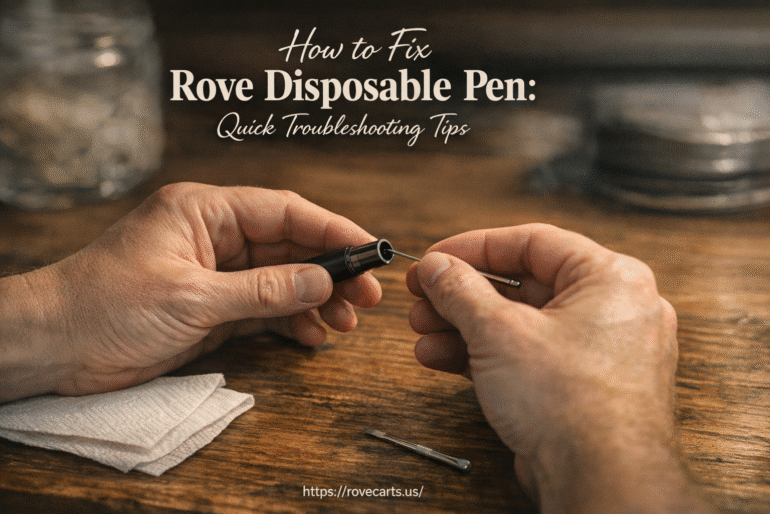
Use a toothpick or a straightened paperclip carefully at the mouthpiece opening only. Don’t push deeper than necessary, just remove visible debris.
- Wipe the mouthpiece with a dry tissue first.
- If residue is thick, wipe with a cotton swab lightly dampened with isopropyl alcohol, then let it fully dry before using.
For alcohol handling and safety basics, see CDC guidance on isopropyl alcohol: https://www.cdc.gov/niosh/npg/npgd0359.html.
4) If it’s blinking or weak: charge it (if applicable)
Some “clog” symptoms are actually low power, especially when the oil is thick and needs more heat to vaporize. If your unit is rechargeable and it’s still showing red while charging, give it more time and use a different cable or power source if needed.
If you’re unsure what model you have, check this guide on rove disposable battery type so you’re troubleshooting the right way.
5) Rule out a true hardware failure
If you’ve warmed it, cleared the mouthpiece, and charged it, but your rove disposable not producing vapor and the light never turns on (or it behaves erratically), the device may have a battery or sensor issue. At that point, it’s usually not fixable at home.
Why Rove Disposables Clog in the First Place
Thick oil + cold temperatures
High-potency oils flow slowly, and cold air makes them even thicker. That’s why clogs often show up after leaving the pen in a car, near an AC vent, or in a cold pocket.
Condensation buildup
Warm vapor cools inside the airway and leaves sticky residue. Over time, that residue narrows airflow and causes a rove disposable pen clogged problem.
Storage position (sideways or upside down)
When a disposable sits on its side, oil can migrate into the central airpath and “flood” the coil area, leading to gurgling, spitback, and restricted airflow.
Prevent Clogs and Airflow Problems (Simple Habits)
Take slower draws
Fast, forceful pulls can pull extra oil into the airway. A slow inhale for 2–4 seconds usually keeps airflow steady and reduces flooding.
Store upright at room temperature
- Keep it upright when possible
- Aim for a moderate indoor temp and avoid direct sun
- Don’t leave it in a hot car or freezing conditions
Keep the mouthpiece clean
If you carry it in a pocket or bag, use a small silicone cap if one came with it, or store it where lint won’t pack into the opening.
Use trusted products and verify where you buy
Counterfeit hardware can clog and fail more often due to poor seals and inconsistent airflow design. Stick to reputable sources and product pages like Rove Brand Vape and the official selection of rove disposable pen options.
When to Replace Instead of Fix
Some rove disposable pen problems are signs the unit is at the end of its life or has a defect. Replacement is the safer choice if:
- The device is empty but you’re trying to “pull through” a burnt taste
- It gets unusually hot during charging or use
- There’s cracking, swelling, or visible battery damage
- Repeated warming and gentle clearing doesn’t restore airflow
FAQ: Rove Disposable Pen Troubleshooting
Why did my Rove disposable pen stop working even though there’s oil?
The two most common reasons are a rove disposable pen clogged airway or a low battery (for rechargeable models). Warming the oil and clearing the mouthpiece fixes most cases.
How do I fix a Rove vape pen airflow issue without causing leaks?
Use gentle warmth and slow pulls. Avoid strong suction or hard squeezing, both can force oil into the airpath and trigger leaking or gurgling.
Is it safe to use a pin to clear a clog?
It’s generally safe if you only clear the visible mouthpiece opening and don’t push deep into the airway. If you puncture internal parts, you can ruin the device.
How should I dispose of a disposable vape?
Because disposables contain lithium batteries, follow local e-waste guidelines. The U.S. EPA has general battery disposal guidance here: https://www.epa.gov/recycle/used-lithium-ion-batteries.