Are Rove Disposables Rechargeable: Yes, No, or Maybe?
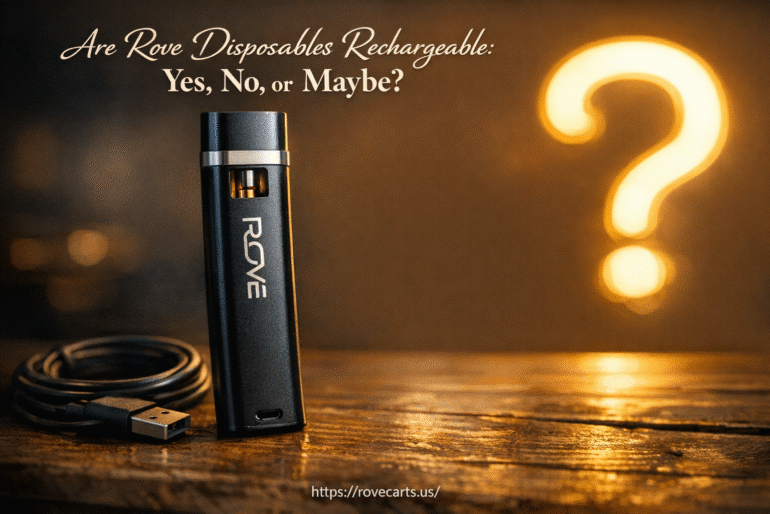
If you’re trying to figure out the rove disposable battery type, the honest answer is: sometimes they’re rechargeable, and sometimes they aren’t. “Disposable” describes the device format (pre-filled, sealed, meant to be discarded), but it doesn’t always tell you if the battery can be recharged.
This guide shows you how to tell what you have in your hand, where to look for a charge port, and when it’s smarter to switch to a rechargeable 510 battery instead.
Quick answer: yes, no, or maybe?
Yes: some Rove disposables are rechargeable
Some disposables include a small lithium-ion battery and a charging circuit so you can recharge the device to finish the oil inside. These usually have a visible charging port or a clearly designed “plug-in” area on the base.
No: some are truly single-use
Other devices are built to be used until the battery dies or the oil runs out, no port, no charging pins, and no supported way to recharge. For these, attempting to charge can be unsafe.
Maybe: branding and listings can be unclear
Online listings, packaging, or store menus sometimes group multiple versions under the same “Rove disposable” label. That’s why checking the physical device matters more than guessing.
How to identify the rove disposable battery type (in your hand)
1) Look for a USB port (most common sign)
If you’re asking “does rove disposable have USB port,” check the bottom edge first. Rechargeable disposables usually have USB-C or micro-USB on the base. If you see a real port opening, it’s likely rechargeable.
Some disposables place the port under a silicone plug or recessed area. If you think you see a small flap or insert on the base, that may be the rove disposable charge port location.
3) Look for charging contacts (less common but possible)
A few disposable devices recharge through contact points rather than a standard port. If you see two small metal contacts on the bottom, it may be designed for a dock-style charger (though this is more common with certain rechargeable batteries than with true disposables).
4) Read the packaging for “rechargeable” language
Packaging is still useful, just don’t rely on it alone. Look for terms like “Rechargeable,” “USB-C,” “charging cable included,” or charging symbols.
Rechargeable vs non-rechargeable disposable vape: what changes for you
Why rechargeable disposables exist
Thicker oils and higher-capacity oil tanks can outlast a small internal battery. Rechargeable models help prevent the common problem of having oil left over after the battery dies.
What to expect from a rove disposable pen battery
- Small capacity battery: Even if rechargeable, it’s usually a compact cell designed for short charging cycles.
- Simple controls: Many disposables are draw-activated with few settings.
- Limited lifespan: Rechargeable doesn’t mean “forever”, it just helps you finish the oil.
Can I recharge Rove disposable safely?
If you’re wondering “can i recharge rove disposable,” the safe rule is simple: only recharge if the device was built for it (a real port or clear manufacturer guidance). If there’s no port and no documentation stating it’s rechargeable, don’t try to force a charge.
Charging safety basics (for rechargeable disposables)
- Use a standard, low-power USB source (like a laptop USB port or a basic wall adapter).
- Don’t charge unattended or overnight.
- Stop charging if the device gets hot, smells odd, or the casing changes shape.
- Keep the port dry and free of lint.
For general lithium-ion safety guidance, the U.S. Fire Administration’s battery safety resources are helpful: https://www.usfa.fema.gov/prevention/home-fires/prevent-fires/battery-fire-safety/.
What if your Rove disposable still shows a red light?
A red light often indicates low battery or a charging state, but light codes vary by device. If your disposable has a port and it still won’t progress past red after a reasonable charge attempt, common causes include:
- Dirty or blocked charge port
- Weak USB power source or faulty cable
- Battery protection triggered (device fault)
- Internal battery failure
If it’s a non-rechargeable rove disposable battery type, a persistent red light can simply mean the battery is near the end of its usable range.
When a 510 battery is the better option
If you want fewer charging surprises, consider switching from disposables to a cartridge + battery setup. Rove sells rechargeable options designed for 510-thread cartridges (often marketed for Rove carts and generally compatible with most 510 carts). These are built to recharge repeatedly and are easier to replace or troubleshoot than a sealed disposable.
You can compare options and availability using Rove Vape Pen Price, or browse device formats in the rove dispo category.
Rove disposable pen specs: what matters most
Exact rove disposable pen specs vary by model, but when you’re deciding between units, focus on:
- Charging method: USB-C/micro-USB vs non-rechargeable
- Oil capacity: larger capacities benefit more from rechargeable batteries
- Airflow and clog resistance: affects draw consistency
- Indicator lights: helps you diagnose low battery vs overheating vs cutoff
For background on e-cigarette aerosol and device considerations, you can reference the CDC’s vaping information pages: https://www.cdc.gov/tobacco/e-cigarettes/.
How to use a Rove disposable (and avoid common issues)
Proper use helps prevent clogs and “dead battery” confusion. For a step-by-step walkthrough, follow how to use rove disposable vape pen.
Bottom line: what to check before you try charging
- If your device has a clear USB port or charge contacts, it’s likely a rechargeable rove disposable battery type.
- If there’s no port and no official guidance, treat it as non-rechargeable.
- If you regularly run into battery limits, a rechargeable 510 battery setup is usually the cleaner long-term solution.